Bedding • Seasonal guide
A Seasonal Bedding Layering Guide: When to Use a Coverlet
The best bed for a changing season isn’t necessarily the one with the thickest comforter. A coverlet offers a lighter, flexible layer: airy enough to use on its own in warm weather, yet useful beneath a duvet when nights turn cool. Here’s how to choose the right weight, build a bed that feels comfortable rather than crowded, and care for natural-fiber layers so they serve you well beyond one season.
What a coverlet does—and what it doesn’t
A coverlet is a relatively lightweight bed covering that can add texture, a little warmth, and a finished look without the substantial loft of many comforters. Depending on its construction and the room’s temperature, it may serve as a top layer, a bedspread, or an in-between layer under a duvet. That adaptability is the reason it earns a place in a seasonal bedding plan.
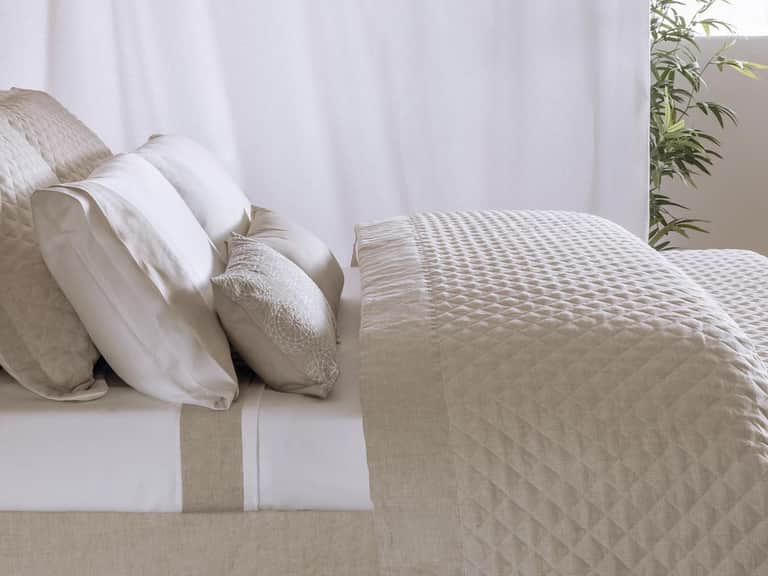
The word can describe a range of designs. Some coverlets are quilted, with stitching that holds layers together and creates a softly structured surface. Others are woven textiles with no separate filling. A quilted linen coverlet backed with cotton percale, for example, may feel more substantial than a single-layer woven blanket, even if both are described as coverlets. Materials, thickness, stitching, and the fabric used on the reverse all affect how a piece feels on the bed.
That distinction matters because a coverlet is not automatically a substitute for a duvet or comforter. It may be just right for a warm sleeper in a mild bedroom, but not enough insulation for a cold room or a chilly winter night. Think of it as a versatile part of the bedding system—not a promise of one particular warmth level.
It also brings an easy design benefit. A coverlet can give plain sheets a bit of dimension, introduce a subtle pattern, or provide a neat finishing layer that can be folded down when you climb into bed. The most useful choice is the one that feels comfortable in your room and works with the layers you already own.
Start with the room, not the calendar
Seasonal bedding advice often moves directly from “summer” to “winter,” as though every home changes temperature in the same way. In real life, bedrooms vary. A sun-facing room may stay warm well into autumn, while a drafty space can feel cool even during spring. Heating, air conditioning, humidity, mattress materials, personal temperature preferences, and the number of people sharing a bed all play a part.
Instead of swapping everything on a date, notice what happens overnight. Do you wake feeling too warm? Are your feet cool even when your upper body is comfortable? Does the room lose heat after midnight? A coverlet gives you a convenient way to respond: use it alone, add it over the sheets, or place it beneath a duvet for a little more adaptable insulation.
Natural fibers can contribute to comfort, but they are not climate control. Linen is valued for its relaxed texture and breathability, while cotton can feel smooth and familiar in a range of weaves. How a textile performs also depends on its density, construction, finish, and the layers surrounding it. For that reason, fabric labels are a useful starting point—but your own room and sleep habits are the final test.
If your bed is shared, consider whether one person tends to run warmer than the other. A lightweight coverlet can be folded across the foot of the bed or kept within easy reach, allowing each sleeper to adjust without rebuilding the entire bed. Small, practical changes often do more for comfort than a dramatic seasonal overhaul.
A simple layering sequence
Layering works best when each piece has a clear job. Begin with the sheets, add a coverlet if you want a light layer or finished appearance, then bring in a duvet or comforter when you need more insulation. You can change the order and use fewer pieces, but this basic arrangement gives you options without making the bed feel overstuffed.
- Sheets: The closest layer to your skin. Choose a fabric and feel you enjoy, and make sure the fitted sheet suits your mattress depth.
- Coverlet: A light-to-moderate layer for added coverage, texture, and flexible warmth. It may sit over the sheet or beneath a duvet.
- Duvet or comforter: The more insulating layer. Its fill, shell, and loft help determine how warm it feels.
- Optional throw: A smaller, easy-to-move layer for the foot of the bed or a cool evening.
One useful arrangement is to place the coverlet over the sheets and fold the duvet down toward the foot of the bed. You get a composed look during the day and can pull up the duvet if the room cools overnight. Another option is to place the coverlet on top of the duvet as a protective or decorative layer, though the combined weight may feel too warm for some sleepers.
For an especially lightweight setup, use sheets and a coverlet alone, keeping a duvet nearby for colder nights. In a transitional season, sheets, coverlet, and duvet provide a range of choices: sleep beneath the top layers, fold one back, or adjust during the night. The right combination is the one that lets you respond comfortably without piling on textiles you don’t need.
Pay attention to movement, too. If layers slide apart, duvet ties, a properly sized cover, or a neatly tucked coverlet may help. If the edges drag on the floor, the top piece may be too large for the bed or the way you like to style it. A good arrangement should feel inviting and easy to manage—not like a carefully balanced display that must remain untouched.
A seasonal guide to coverlet use
Spring: build a flexible middle layer
Spring nights can swing from mild to surprisingly cool. Try sheets with a coverlet, then keep the duvet folded at the foot of the bed or within reach. If your bedroom stays chilly, layer the coverlet beneath the duvet rather than expecting it to provide all the warmth. As temperatures rise, you can remove the duvet without changing the entire bed.
Summer: let the coverlet stand alone
In a warm room, a breathable coverlet can offer a sense of coverage without the loft of a heavy comforter. Pair it with a sheet and use it as a light top layer. If the nights are hot, it can be folded aside or used only over your feet. A coverlet’s actual warmth depends on its fabric and construction, so a quilted or lined version may feel warmer than its name suggests.
Autumn: add warmth in small steps
When evenings begin to cool, keep the coverlet over the sheets and add a duvet when needed. This lets you adjust gradually rather than replacing every layer at once. On milder nights, the duvet can stay folded back; when the room cools, pull it up. A coverlet can also help create a tidy surface over a duvet during the day.
Winter: use it as a supporting layer
For many bedrooms, a coverlet alone will not be warm enough during winter. Use it beneath a duvet for an additional layer, or keep it folded across the foot of the bed for targeted warmth. If the combination feels heavy or overheated, remove a layer; more bedding isn’t automatically more comfortable.
Weight, texture, and fabric: what to look for
A coverlet’s weight is one of the first clues to how it might fit into your routine. A light, unfilled weave may be most appealing on warm nights. A quilted coverlet, particularly one with a lining or filling, may offer a more noticeable layer and a little extra substance. When available, look for clear details about materials, construction, and care rather than relying on a product name alone.
Linen brings a softly irregular texture that can make a bed feel relaxed and lived-in. It can be woven into different weights and finishes, so not every linen coverlet will have the same drape or hand. A stone-washed surface may feel more relaxed than a crisp, tightly finished textile. Natural variation in yarn or weave can be part of the material’s character; care labels explain how to preserve the particular piece you choose.
Cotton is another common choice, including as a backing fabric on a linen coverlet. A cotton percale backing, for instance, contributes a smooth, crisp counterpoint to textured linen. Quilting can add structure and distribute a filling, while a simple woven coverlet may fall more fluidly over the bed. Neither construction is universally better. The question is whether you prefer a defined, quilted surface or a softer, less structured drape.
For a product example, the Bovi Hudson Linen Quilted Coverlet combines European linen with a cotton percale backing and a diamond-quilted design. Those details make it a useful reference when comparing texture, construction, and layering potential. Its stated materials and quilting are more informative than the word “coverlet” by itself; check its care guidance and dimensions before deciding how it would fit into your bed.
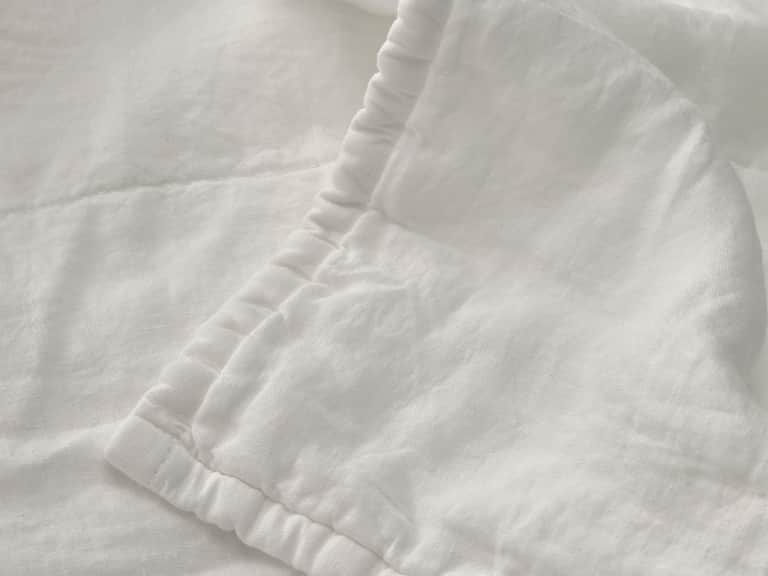
Another example is the Rem Quilt, which has a linen outer shell and polyester filling. The garment-dyed finish creates color variation, and the design is described as suitable for mid-season use. Its filled construction makes it a different kind of layer from an unfilled linen coverlet. That difference is precisely why it helps to compare a textile’s full construction rather than assuming all quilts, coverlets, and bedspreads will feel alike.
Coyuchi bedding can also serve as a useful reference point when thinking about natural textures and a cohesive bedding palette. Rather than choosing a coverlet solely to match a brand or collection, compare the pieces you’re considering by fiber, surface, weight, and care instructions. Similar colors can coordinate even when the textiles come from different makers; a mix of textures can make a bed feel considered without requiring a perfectly matched set.
How to make layers look polished, not piled on
The appeal of layered bedding is its ease, so styling shouldn’t become a nightly chore. Start with a limited palette—perhaps white or natural sheets, a softly colored coverlet, and a duvet in a complementary neutral. A stripe or small-scale quilt pattern can provide interest, while solid pillowcases help keep the overall effect calm.
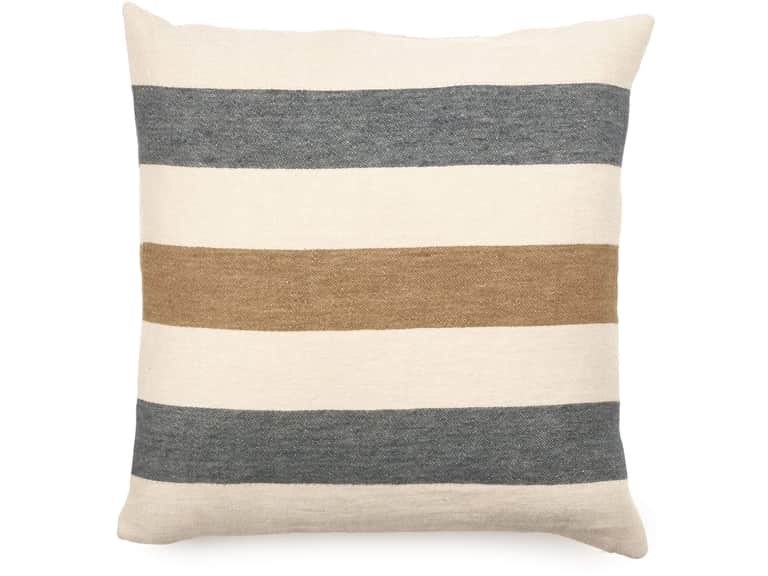
Varying texture is often more effective than adding more color. Linen beside smooth cotton, or a quilted surface against a plain sheet, creates visual depth while keeping the bed restful. If you choose a coverlet with a pronounced pattern, let it take the lead. If the coverlet is a solid color, a textured pillow cover can add a small accent without competing for attention.
Consider how much of the bed you want the coverlet to cover. Pulled up to the pillows, it creates a clean, complete look. Folded lengthwise at the foot, it adds a layer that is easy to reach. Draped over a duvet, it can help frame the bed, but make sure the additional fabric doesn’t overwhelm a smaller mattress or make the bedding hard to move.
Bed size and dimensions matter as much as color. Check the coverlet’s measurements against your mattress, including its height and any bed skirt or frame. A piece that is too narrow may not fall evenly on both sides; an oversized one can bunch against the floor. When buying online, product dimensions and construction details are especially useful, and a tape measure can prevent an unpleasant surprise.
Care that respects the fabric
Before washing a coverlet, read its specific care label. Linen, cotton, quilted construction, and filling can each affect what is safe. A textile’s maker may recommend a cool, gentle cycle, line drying, low-temperature tumble drying, or professional cleaning. Don’t assume that a coverlet can be washed like a pillowcase simply because it is made from a natural fiber.
For washable linen, gentle handling is often a sensible approach: avoid overloading the machine, use a mild detergent, and follow the stated temperature limit. Line drying can reduce exposure to heat and help preserve the fabric’s feel, while a low dryer setting may be convenient when permitted. Remove the piece promptly to limit deep creasing. If ironing is appropriate, the care instructions may recommend doing so while the linen is slightly damp.
Quilted pieces need particular attention because repeated harsh washing or high heat can affect stitching, shape, or filling. Wash a large bed covering only in a machine with enough capacity to let it move freely. If it feels cramped, consider a professional cleaner or a suitably sized laundry facility, following the manufacturer’s guidance. Store clean bedding completely dry in a breathable place, away from damp conditions.
Regular care also includes small habits between washes. Air the bed when practical, shake out a coverlet, and spot-clean minor marks according to the label. Rotate the way it lies on the bed if one area receives more wear. For a decorative piece that is not used directly against the skin, washing less frequently may be appropriate, provided it stays fresh and the care instructions allow that approach.
Common layering missteps—and easy fixes
- Choosing by season name alone. “Summer coverlet” doesn’t tell you how a piece will feel in your bedroom. Look at fabric, weight, lining, and quilting, then consider your room’s temperature.
- Assuming every coverlet replaces a comforter. Some are designed as light layers; others include filling or substantial quilting. If you need winter warmth, plan on a duvet or another insulating layer where appropriate.
- Adding layers without testing them together. A heavy duvet plus a dense quilted coverlet may feel too warm. Try the combination for a night and remove whichever layer is unnecessary.
- Ignoring care instructions. A washable fabric may still have limits because of its stitching, finish, or filling. Check the label before committing to a routine.
- Buying without checking the dimensions. Measure the mattress and compare it with the coverlet’s listed size, especially if you want a particular amount of drape at the sides.
The case for a smaller, smarter bedding rotation
Seasonal comfort does not require a closet full of bedding. A dependable sheet set, a versatile coverlet, and a duvet suited to the coldest nights in your home can create several combinations. On warm nights, use the sheets and coverlet. During transitions, add or fold back the duvet. When the room is cold, use the full arrangement—or add another layer if you still need it.
Before buying something new, take stock of what you own. Could a quilted bedcover work as a coverlet? Is a spare blanket light enough to keep at the foot of the bed? Does your duvet already offer enough warmth without another substantial layer? These questions can help you make a more useful choice and avoid accumulating pieces that look appealing but rarely leave the cupboard.
If you do add a coverlet, think beyond appearance. A piece that fits your climate, suits your care routine, and feels comfortable against your preferred layers is more likely to become part of everyday life. Natural textures can bring warmth and character to a room, but practical details—construction, dimensions, and maintenance—are what make a bedding layer work night after night.
A quick coverlet checklist
Before you settle on a seasonal setup, ask yourself a few simple questions:
- Will the coverlet be used alone, beneath a duvet, or mainly as a finishing layer?
- Is it woven, quilted, lined, or filled—and how might that construction affect its warmth?
- Do its fiber and texture work with your sheets and duvet?
- Are its dimensions right for your mattress and preferred amount of drape?
- Can you follow its care instructions comfortably at home?
A coverlet earns its place by making your bed more adaptable. In warm weather, it can provide a light, breathable sense of coverage. During cooler months, it can sit between sheets and a duvet or add a neat layer to the bed. Choose according to the textile’s actual weight and construction, pay attention to your room’s temperature, and let comfort—not the calendar—decide when to use it.